Self-Publishing vs Traditional Publishing
Two roads diverged in a yellow wood—and while Robert Frost was talking about something far bigger than publishing, every author who has finished a manuscript eventually finds themselves standing at a similar crossroads.
One path leads towards traditional publishing: finding the right publisher, submitting your manuscript, waiting for responses and hoping your story makes it through the selection process. The other leads towards self-publishing, where you take greater control over the journey and bring your book to readers on your own terms.
So, which road should you take?
The answer isn’t as simple as choosing the “better” option. Both self-publishing and traditional publishing come with their own advantages, challenges and opportunities. And with India’s publishing industry evolving rapidly, authors today have more choices than ever before.
In this blog, we’ll compare self-publishing vs traditional publishing in India to help you understand both paths—and decide which book publishing service is right for your book.
The Traditional Publishing Route
For decades, traditional publishing was the only legitimate way to become an author. In this model, you send your manuscript to literary agents or publishing companies, and if you’re lucky enough and they like your manuscript, they take care of everything—from editing and cover design to printing, distribution, and marketing. In return, you give up some control over the publishing process and typically earn royalties on the sales of your book.
The Pros of Traditional Publishing
The biggest benefit of traditional publishing is that the author has to bear no upfront costs. The publishing house covers developmental editing, cover design, printing, and distribution. There’s also a level of industry validation and prestige that traditional publishing offers, which can sometimes open doors to literary awards and media coverage. Plus, traditional publishers usually give you an advance payment against your future royalties.
The Cons of Traditional Publishing
Before your book becomes a bestseller, it first needs to get published. However, publishing your book the traditional way can be incredibly frustrating. The acceptance rate is notoriously low, with publishers typically accepting only about 2% to 5% of the submissions they receive. If you do manage to secure a contract, the timeline is painfully slow. From submission to publication, it regularly takes between 12 and 24 months, and sometimes up to three years, to actually see your book on a shelf.
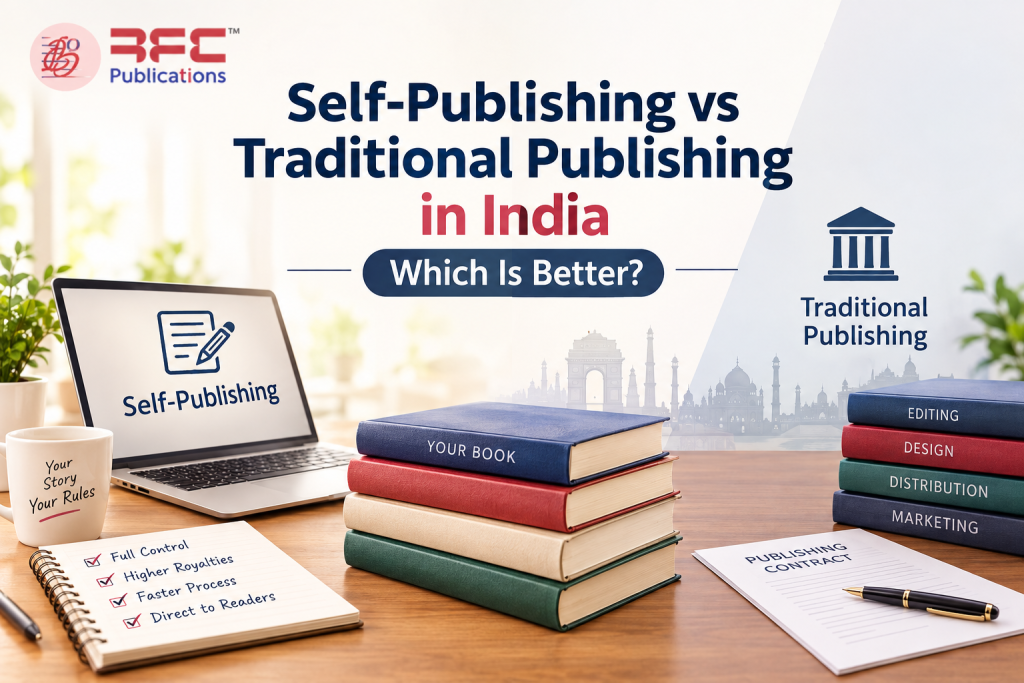
Furthermore, you “pay” for that zero upfront cost by surrendering your creative control and a massive chunk of your earnings. The publisher usually dictates the final edits, changes the title, and chooses the cover design. Financially, traditional royalties are quite low—usually ranging from 8% to 15% of net sales.
The Self-Publishing Route
On the other hand, the shift toward digital platforms and creator tools has turned the industry upside down. Nowadays, online book publishing means that instead of going through traditional gatekeepers, you are your own gatekeeper. This is where self-publishing enters. You have greater control over your book, from its content and design to how and when it reaches readers. More importantly, the process is far more accessible, allowing authors to bring their stories to the market without waiting for a traditional publisher’s approval.
The Pros of Self-Publishing
Self-publishing puts the author firmly in the driver’s seat. Instead of waiting for a publisher to approve your manuscript or determine when and how your book reaches readers, you have the freedom to make those decisions yourself. This greater control also comes with some practical advantages:
Speed to Market: If you want a quicker turnaround for your book and bypass a traditional publishing house, you can get your book self-published and listed on major online platforms within 2-8 weeks.
100% Control: You are the decision-maker at every stage of publishing your book—from the story and book cover to the format, pricing, and release date.
Profit Margins: When you self-publish, you retain a much larger share of the revenue—very often even 100% of the royalties— after accounting for printing and platform costs.
The Cons of Self-Publishing:
The principal trade-off is that you become the publisher. While this gives you greater control over your book, you are also 100% responsible for managing the publishing process, from editing and cover design to printing and distribution. Sometimes, you are also responsible for your own marketing and creating awareness of your book.
That being said, many self-publishing companies and book publishing services, like BFC Publications, also offer marketing and distribution support, making the book publishing process much more manageable.
So What Path Should You Take?
There is no single publishing route that is right for every author. The choice ultimately depends on your goals, budget, timeline, and how much control you want over the publishing process.
If you have little to no budget for publishing, are writing literary fiction with a strong focus on traditional recognition or industry awards, and are willing to wait a year or two, traditional publishing may be worth pursuing. It can offer industry validation, professional support, and access to established publishing and distribution networks.
On the other hand, if you value creative control, want to bring your book to readers sooner, and are willing to take a more active role in the publishing process, self-publishing can be a powerful option. However, choosing self-publishing does not mean that quality or credibility should be compromised. Readers do pay attention to a book’s publisher, especially when they are discovering a new author, so professional editing, design, printing, distribution, and marketing can make a significant difference.
The good news is that you do not have to manage every part of the process on your own. Professional book publishing services can provide support with everything from editing and interior layout to cover design, printing, marketing, and distribution. This allows you to retain greater control over your book while still getting the expertise needed to bring it up to industry standards.
When comparing your options, look for a book publishing website that is transparent about its services, packages, rights, royalties, and distribution. A good publishing partner should make the process clear, help you understand what you are paying for, and allow you to make informed decisions about your book.
It’s a Wrap!
Your choice on how your work is published is one of the biggest choices you’ll make. Traditional publishing offers authority, prestige, professional support, and no upfront publishing costs. The downside? It can take a long time, and you may have to give up a degree of creative control and a larger share of your earnings.
Self-publishing, on the other hand, offers greater freedom, faster turnaround, and the potential to earn significantly more per copy. While you may have to invest in producing and marketing your book, you also have greater control over the quality, pricing, and overall publishing journey.
Ultimately, there is no one-size-fits-all answer. Choose the path that aligns with your goals, resources, timeline, and vision for your book—and give your story the best opportunity to reach the readers it deserves.