Book Publishing Process
To anyone outside the literary world, turning a digital manuscript into a physical book on a bookstore shelf can feel almost like alchemy. An author finishes a draft, hands it off to a publishing house, and a few months later, shiny new hardcovers and paperbacks grace display windows. Yet every author who has set foot in the publishing industry knows that the reality is far more structured, demanding, and intricate.
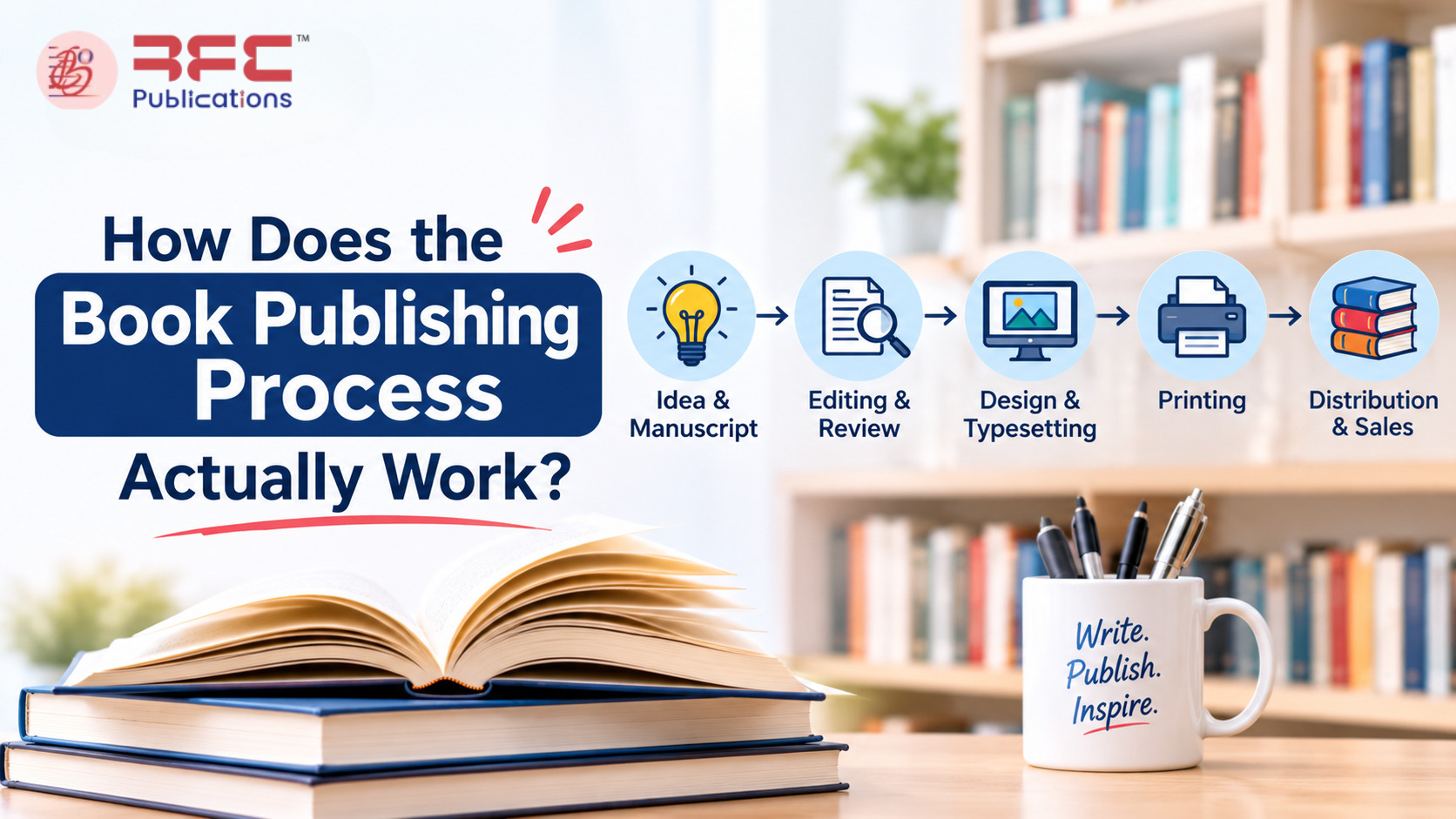
Modern book publishing requires navigating a multi-stage production pipeline—from developmental editing and legal rights acquisition to interior design, cover design, and algorithmic metadata distribution. Whether your objective is to secure a contract with a traditional publishing house or to retain full creative control as a self-published author, mastering how book publishing process actually works is essential. Below is a step-by-step roadmap to what really happens behind the scenes.
Manuscript Finalisation and Structural Polish
The manuscript should undergo extensive developmental work before it officially enters the formal book publishing process. It is a time for stepping back and examining the structure of the story or argumentation presented in the manuscript. The author of a work of fiction should focus on its pacing, characters’ consistency, plot holes, and voice. The author of a non-fiction work should verify the sources, fix the structure of chapters, and make sure that their thesis statement is coherent.
A lot of authors rely on the help of beta readers—people who have similar preferences to the target audience of the work—to find out what parts of the manuscript bore the readers or confuse them.
The Fork in the Road: Traditional Acquisition vs. Self-Publishing
After you have polished your manuscript, you face the critical decision of choosing a publishing model. It determines what follows next in the book publishing process:
– The Traditional Way
If you seek a traditional deal with a major or medium-sized Indian publisher, you usually go into the query trenches. While commissioning editors sometimes accept direct submissions in India, literary agents increasingly serve as gatekeepers and business managers. You send a query letter, a synopsis, and sample chapters to them. If an agent agrees to represent you, they work with you on edits and then approach the editors of publishing houses directly. Once the editor buys your manuscript, they purchase certain rights (Indian subcontinent print, digital, or audio) from you in exchange for an advance against royalties.
– The Self-Publishing Way
If you decide on self-publishing, you skip all gatekeepers. You become the general contractor of your project. You retain 100% of your rights and royalties, but you have to manage and finance each step of the production process personally.
The Production Pipeline (Copyediting, Interior Layout, and Cover Design)
Regardless of who publishes the book, the core production sequence remains identical:
– Line & Copyediting
The editor goes over every single line in the manuscript, fine-tuning the prose to improve its syntax, remove redundancies, fix grammar mistakes, and make the style consistent, adhering to the established rules described in standard style manuals (e.g., the Oxford Style Manual, heavily used in Indian publishing).
– Interior Design and Typesetting
Not everything can be simply printed off a standard word processor file. The typesetter uses special desktop publishing software and designs such elements as correct margins, typography, running heads, chapter drop-caps, etc. In the case of digital publishing, this involves the compilation of reflowable EPUB (Electronic Publication) files for different reading platforms.
– Cover Design
Your cover is your best marketing tool. An experienced designer does more than create good artwork; they design the cover in such a way that your readers will immediately know if the book is a mythological thriller, campus romance, or business book.
– Proofreading
When all of the pages are laid out into the galley proofs, the proofreader performs the final check of the pages to eliminate typos, bad hyphenation, or other possible layout mistakes.
Metadata, Registration, and Distribution
Before a single copy is printed or downloaded, the technical infrastructure must be put in place:
– ISBNs & Barcodes
Every format of your book needs its own unique number known as an International Standard Book Number (ISBN) for effective sales, inventory management, and cataloguing processes. In India, these are often registered through the Raja Rammohun Roy National Agency for ISBN.
– Optimising Metadata
This is the information you provide about your book, such as its title, subtitle, author biography, blurb from the back cover, BISAC subjects, and search terms. Your book will only be found via search engines and digital bookstore algorithms by means of its metadata.
– Distribution Setup
Traditional publishers use distributors in order to fulfil demand for the printed copies of the book in the national wholesale network of local bookstores, libraries, and chains like Crossword. Meanwhile, indie authors upload the printable PDF and EPUB copies of the book to POD distributors such as Notion Press, Pothi, Amazon KDP, or IngramSpark.
Printing, Advance Reviews, and Launch
In traditional publishing, the interval from signing a publishing agreement until the book’s physical release may vary from 12 to 18 months. Such long preparation is necessary because the salespeople will need several months to show the catalogue to booksellers, and publicists will need a lot of time for mailing ARCs to magazines, newspapers, and book clubs.
Although self-published authors have faster schedules, the logic behind it is always the same: mail out ARCs weeks before the release date to generate buzz, get feedback, and finalise their promotion campaigns.
Conclusion
Navigating the book publishing process universe takes more than simply writing a book; it requires taking the plunge and stepping into the business side of authorship. Whether taking the conventional route or self-publishing, it is crucial for you to maintain high professionalism at all costs. Familiarise yourself with the technicalities, get good editing and design, and champion your book passionately. It’s true that ultimately, you have no power over the market and its algorithms. But once you have released the book, it’s time to go and write the next one!