Publish a Hindi Book
Hindi has one of the largest reading audiences in India, with more than 52 crore people reporting it as their mother tongue in the last available Census. Regional languages also account for a significant share of India’s non-textbook book sales, creating opportunities for Hindi authors to reach readers across the country.
Yet, publishing a Hindi book comes with its own considerations. While platforms like Amazon KDP support Hindi, the process and available options can differ from those for English books. Authors need to understand their publishing choices, formatting requirements, distribution options, and costs before taking the next step.
The good news is that there are multiple ways to bring your Hindi manuscript to readers today, from traditional publishing to self-publishing. In this guide, we’ll walk you through how to publish a Hindi book successfully, helping you choose the right route and take your manuscript from the page to the hands of readers.
Prepare Your Hindi Manuscript for Publishing
You don’t need a perfectly polished manuscript to approach a publisher. What matters is having a clear idea, a well-developed draft, and a story or subject you’re ready to share. The editing, proofreading, and formatting can be taken care of as part of the publishing process, depending on the services you choose. However, you do need to keep a few basics in mind, such as maintaining consistent formatting, choosing suitable fonts, and organising your content in a clear, readable manner.
- Write in Unicode Devanagari: If you’re writing your manuscript digitally, using a Unicode-compatible Devanagari font can make the text easier to edit, format, and prepare for publication.
- Focus on Your Content: Work on developing your ideas, structuring your chapters, and making your writing as clear as possible. Don’t let minor grammar or formatting issues get in the way of getting your Hindi book published.
At BFC Publications, authors can access professional editing and formatting support to prepare their manuscripts for publication. So, instead of waiting until every sentence is perfect, focus on getting your ideas on paper and finding the publishing route that works for you.
Choose the Right Publishing Route
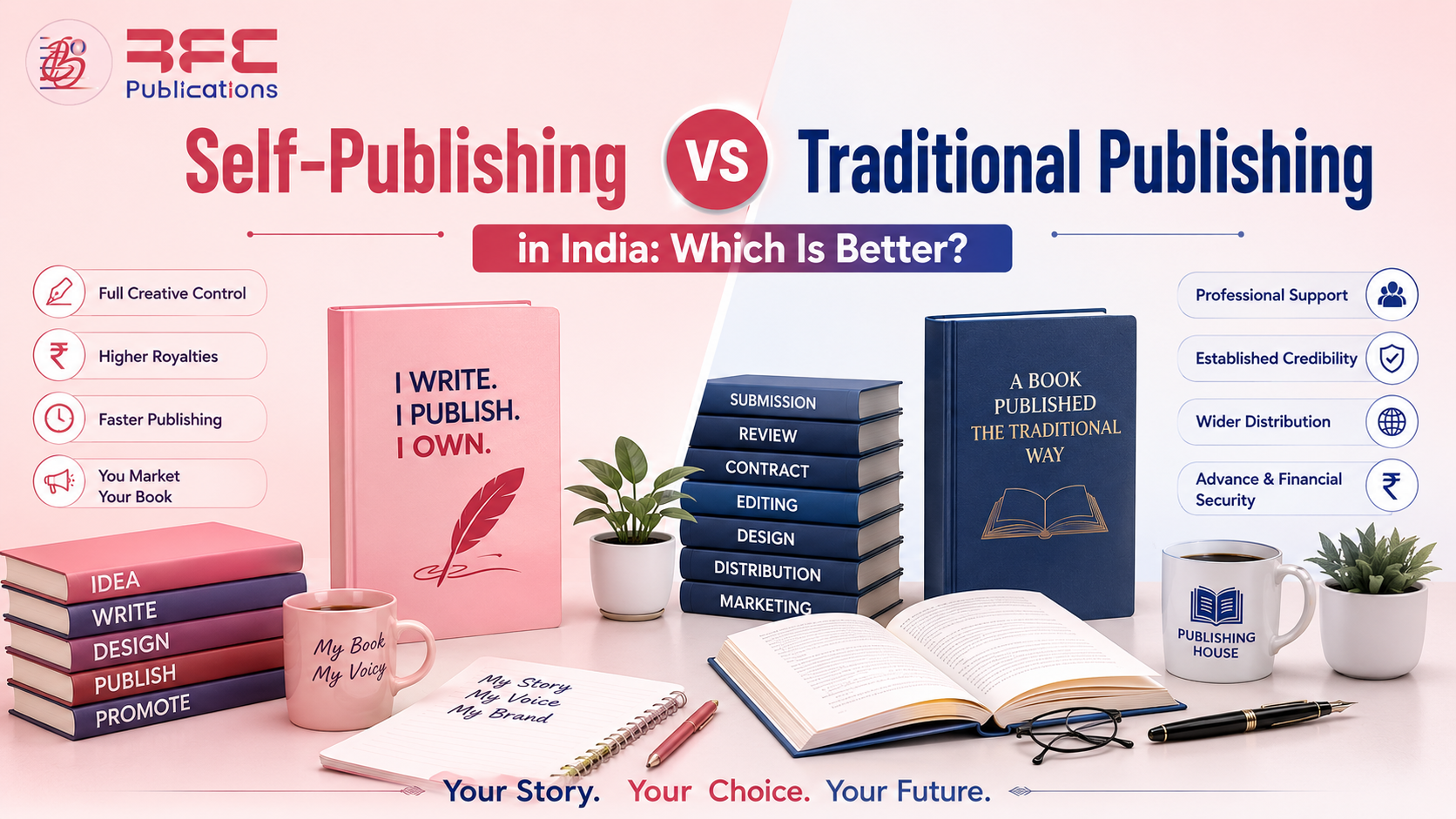
Once your Hindi manuscript is ready to move forward, the next step is choosing how you want to publish it. Your options generally fall into two categories: traditional publishing and self-publishing. Each comes with a different level of creative control, investment, and support, so the right choice depends on your goals and expectations as an author.
-
Traditional Publishing
In traditional publishing, a publisher evaluates your manuscript and decides whether to take it on. If accepted, the publisher typically covers the costs of editing, cover design, printing, and distribution, and may also handle marketing and promotion. You earn royalties from book sales as per your publishing agreement, without paying the publisher an upfront fee for these services.
Keep in mind that acceptance depends on the publisher’s editorial priorities, submission guidelines, and assessment of your work.
-
Self-Publishing
Self-publishing gives you greater control over your book, from its content and design to pricing and publication timelines. You can choose the services you need and decide how your book reaches readers. However, you are also responsible for arranging and funding the services required to prepare, publish a book, and promote it.
Print-on-demand services can also make physical copies available without requiring you to order a large print run in advance. Royalties, printing costs, and distribution options vary by platform, format, and marketplace.
At BFC Publications, authors can explore publishing packages designed to support their books from manuscript preparation to publication and distribution. This approach allows you to focus on your writing while receiving assistance with the practical steps involved in bringing your book to readers.
Pay Attention to Hindi-Specific Formatting
Formatting a Hindi book requires attention to certain details that may differ from those of an English book. From the readability of Devanagari text to the placement of the title on the cover, the right formatting choices can make your book easier to read and more appealing to potential readers.
- Interior Formatting: Devanagari script includes matras, conjunct letters, and characters that extend above or below the main line of text. Adequate line spacing, consistent margins, and proper text alignment are essential to ensure readability and prevent the text from appearing cramped.
- Cover Design: Your book cover plays an important role in attracting readers. If your title is in Hindi, make sure it remains clear and legible even at smaller sizes. Since many readers discover books online through thumbnail images on their phones, the title and other key details should be easy to read at a glance.
Secure Your ISBN and Take Care of Legalities
An ISBN (International Standard Book Number) is a unique identifier for a book edition and format. It helps booksellers, distributors, libraries, and online marketplaces identify and manage book listings. Whether you need one depends on your publishing format and distribution plans, as requirements may vary across platforms.
In India, authors and publishers can apply for an ISBN through the official website of the Raja Rammohun Roy National Agency for ISBNs. If you’re working with a self-publishing service provider, they may also assist you with the ISBN application process.
Set Up Your Distribution Channels
Once your book is ready for publication, the next step is making it available to readers. Choosing the right distribution channels can help you reach your intended audience in both print and digital formats.
- Digital Distribution: Amazon Kindle Direct Publishing (KDP) is one option for publishing eBooks. You can also explore Google Play Books and other platforms that support Hindi titles. Before choosing a platform, check its Hindi-language support, formatting requirements, royalty structure, and distribution options.
- Print Distribution: Print-on-demand (POD) can be a practical option for first-time authors. Books are printed when orders are placed, reducing the need to invest in a large print run or maintain inventory upfront. You can also explore publishing services that offer print production and distribution support.
- Pricing: Set a price that reflects your book’s length, production costs, genre, and intended readership. An accessible price can encourage more readers to give your book a chance, but it should also account for printing expenses, distribution charges, and your royalty expectations.
Launch and Market Your Book Effectively
Publishing your book is only the beginning. To help it reach readers, you need to build awareness, connect with the right audience, and make it easy for people to discover your work. Here are a few ways to promote your Hindi book:
- WhatsApp and Facebook Groups: Start by sharing your book with relevant communities, including literature-focused groups, reading clubs, alumni networks, and groups interested in your genre. Focus on meaningful engagement rather than repeatedly posting promotional messages.
- Hindi BookTube: Connect with YouTube channels and book reviewers who cover Hindi literature and your particular genre. Reviews, author interviews, and reading recommendations can help introduce your book to audiences who are already interested in similar works.
- Offline Events and Literary Festivals: Book launches, literary festivals, poetry gatherings, and local Kavi Sammelans can offer opportunities to meet readers and fellow writers. Participating in relevant events can help you build connections and introduce your work to a wider audience.
- Metadata and Keywords: Make your book easier to discover by choosing a clear title, an informative description, and relevant keywords. Depending on the platform and your target audience, including suitable keywords in both Devanagari and Roman script may help readers find your book, particularly when they search for Hindi titles using the English alphabet.
Conclusion
Publishing a Hindi book may seem like a complicated process at first, but understanding each step can make the journey more manageable. From preparing your manuscript and choosing a publishing route to formatting your book, setting up distribution, and promoting your work, every stage brings you closer to your readers.
Whether you choose traditional publishing or self-publishing, focus on finding an approach that suits your goals and gives your book the support it needs.