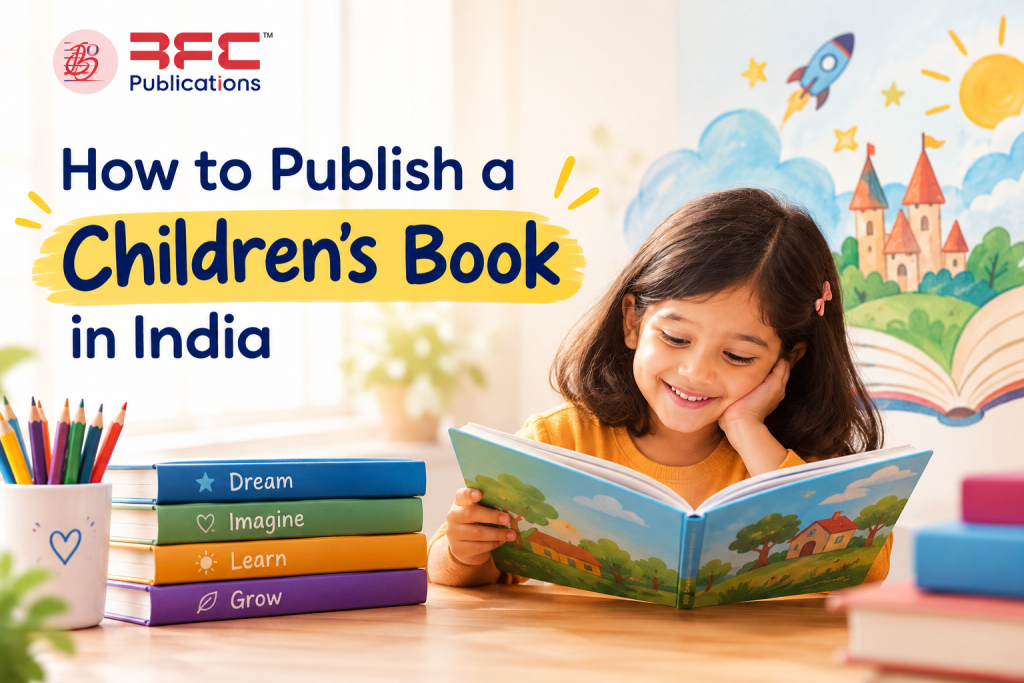
Have you been thinking about writing a children’s books? It could be a story inspired by Indian mythology, a tale about a talking dog in Mumbai, or an idea that introduces young readers to something new. Whatever your concept, turning it into a published book is a dream that can definitely come true.
But writing the story is only the beginning. You also need to prepare your manuscript, choose a publishing route, and figure out how to reach your readers.
If you’re wondering where to start, here’s a practical guide to publishing a children’s books in India.
How to Publish a Children’s Books in India
Polish Your Manuscript
Before approaching a publisher or preparing your book for publication, make sure your manuscript is ready. A good children’s books holds a young reader’s attention while using language, themes, and storytelling suited to their age.
-
Who Is Your Target Reader?
Identify the age group you’re writing for. Board books are generally designed for babies and toddlers, picture books often target children aged 3–8, early chapter books suit emerging independent readers, and middle-grade fiction typically caters to readers aged 8–12.
These categories are guidelines, but knowing your audience will help you determine the vocabulary, length, and complexity of your story.
-
Review Your Content
Check whether your story’s language, pacing, and themes suit your intended readers. In picture books, every word should serve a purpose, with illustrations often helping tell the story. The ideal word count depends on the format and publisher’s requirements.
-
Read It Aloud
Reading your manuscript aloud can help you identify awkward sentences, unnatural dialogue, and pacing issues. If possible, share it with children in your target age group and observe their responses. Their feedback can help you understand which parts work and which need further revision.
Choose Your Publishing Route
Once your manuscript is ready, decide how you want to publish it. The two common options are traditional publishing and self-publishing, each offering different levels of control, support, and investment.
-
Traditional Publishing
In traditional publishing, you submit your manuscript to a publisher for consideration. If accepted, your agreement will outline the rights, royalties, and responsibilities of both parties.
The publisher typically manages or coordinates editing, illustrations, design, printing, and distribution. Marketing support depends on the publisher and your agreement.
Getting accepted can be competitive, but an established publisher may offer professional expertise and access to existing distribution networks.
-
Self-Publishing
Self-publishing gives you greater control over your book’s creative decisions and publishing timeline. You can manage the process independently or work with a publishing service provider for assistance with editing, illustration, design, printing, and distribution.
Platforms such as Amazon Kindle Direct Publishing (KDP) also enable authors to publish books in eligible formats.
Self-publishing generally requires you to fund the services you choose and take an active role in promoting your book. Consider your budget, the support you need, and the level of control you want before deciding.
Still deciding between the two? Read our detailed guide on Self-Publishing vs Traditional Publishing in India to understand how they differ in terms of cost, creative control, royalties, and distribution.
Finding the Right Publisher
Research is essential, whether you’re approaching traditional publishers or evaluating self-publishing services.
-
Do Your Homework
Look for publishers that work with your genre and format. Some specialise in picture books, educational titles, Indian folktales, bilingual stories, or middle-grade fiction. Explore their existing catalogue and editorial approach to determine whether your manuscript is a good fit.
-
Check Submission Guidelines
Publishers have different submission requirements. Some accept unsolicited manuscripts, while others work through literary agents or accept submissions during specific periods.
Follow the guidelines on their official websites and provide the requested documents. If you’re considering a self-publishing company, check its services, pricing, royalty structure, distribution options, and terms regarding your rights.
Prepare a Strong Query Letter
Your submission should clearly communicate what makes your book worth considering. Depending on the publisher’s requirements, include:
- A hook: Introduce the central idea in a few engaging lines.
- A synopsis: Briefly explain the story and its key characters.
- Target age group: Specify the intended readers and format.
- Author bio: Share relevant writing experience or background.
- Sample pages: Include the requested manuscript sections or complete manuscript.
Keep your submission concise, relevant, and tailored to the publisher.
Get the Illustrations Right
For children’s books, particularly picture books, illustrations help establish the setting, convey emotions, and bring characters to life. The artwork should complement the text and suit the intended age group.
If you’re approaching a traditional publisher, check whether it prefers to select the illustrator. Many publishers coordinate illustrations themselves, so you generally don’t need to commission artwork before submitting unless requested.
With self-publishing, you typically have more control over choosing an illustrator. Explore portfolios on platforms such as Behance and Upwork, or through professional networks and social media.
Before hiring an illustrator, discuss the visual style, number of illustrations, revisions, timelines, payment, and usage rights.
Market Your Book to the Right Readers
Publishing your book is an important milestone, but helping readers discover it takes additional effort. Your marketing strategy should reflect your book’s subject, audience, and budget.
-
Explore School Visits
Schools can offer opportunities to introduce your book to young readers. Depending on its theme, propose storytelling sessions, reading activities, or creative writing workshops. Contact relevant schools with a clear idea of what the session would involve and explore book-sale arrangements where appropriate.
-
Use Social Media
Share character introductions, illustrations, short readings, and glimpses of your writing process. Parents, teachers, librarians, and children’s books reviewers can be valuable audiences.
Connect with reviewers whose content aligns with your book, and focus on genuine engagement rather than generic promotional messages.
-
Connect with Independent Bookstores
Approach bookstores that stock children’s literature and introduce them to your book. Depending on their policies, you could explore stocking arrangements, author interactions, or reading sessions.
-
Improve Online Discoverability
A clear book description, professional cover, relevant keywords, and appropriate categories can help readers understand what your book offers. Share accurate purchase links and encourage readers to leave honest reviews.
You don’t need to promote your book everywhere at once. Start with the channels most relevant to your audience and build from there.
Taking the Leap
Publishing a children’s books involves more than writing a good story. It requires thoughtful editing, informed publishing decisions, suitable illustrations, and a plan to reach readers.
Start by refining your manuscript and understanding your audience. Then explore your publishing options and choose the approach that best fits your goals.
With the right preparation, you can take your story from an idea to a finished book that young readers can enjoy. Visit us at BFC Publications, and we’ll help you find the right publishing path for your children’s books.